If you are dealing with persistent back pain, leg discomfort or disc-related symptoms, non-surgical spinal decompression is one of the options worth understanding properly. Plenty of patients arrive at Active Health in Jacksonville after months of symptoms that keep returning with daily activity, sitting or lifting.
Decompression is a motorized, traction-based therapy that applies controlled tension to the spine, cycling between distraction and relaxation to lower the pressure inside the disc and reduce the compression at the nerve root.
Every recommendation here starts with an evaluation. You are told what the therapy is designed to support, how it fits alongside the rest of your plan, and what realistic progress looks like across a course, before anything is scheduled.
What Spinal Decompression Therapy Is
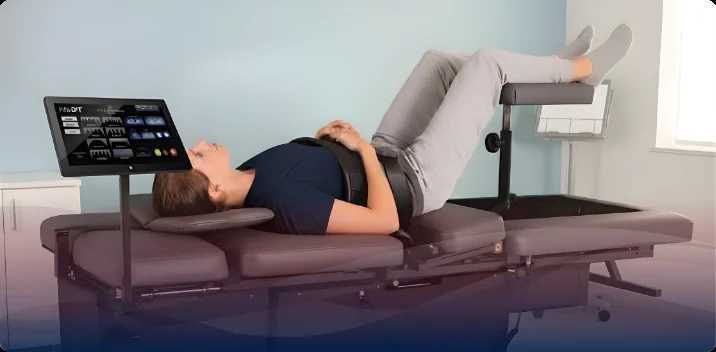
Spinal decompression is a motorized, traction-based therapy delivered on a table. Computer-controlled tension patterns cycle between distraction and relaxation rather than holding one continuous pull, and that cycling is what separates it from the traction most people picture. The intent is to lower the pressure inside the disc and ease compression at the nerve root across a course of sessions.
The settings are not one-size here. The tension, the angle and the session length are set from your imaging, your symptom pattern and what you can tolerate on the first visit, then adjusted as your response develops. Settings that are not producing what they should are changed early rather than run to the end.
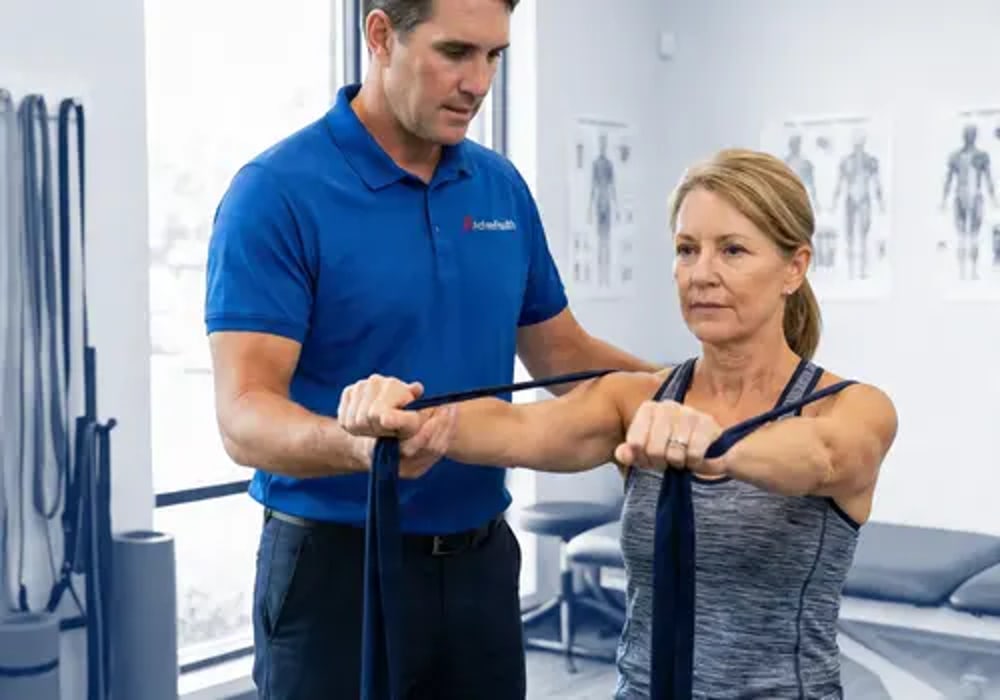
Decompression is also not the plan on its own. Unloading a segment creates a window; the strength and control work is what keeps the segment unloaded once you get off the table, which is why every course here is scheduled alongside the rehabilitation that follows it. That sequencing is ordinary physical medicine and rehabilitation practice: the passive tool opens a window and the active work decides whether it stays open.
Conditions We Treat With Spinal Decompression in Jacksonville
Decompression is considered when symptoms are disc-related or nerve-irritated and movement-based care alone has not moved them.
Lumbar Disc Herniation and Bulge
Displaced disc material in contact with a nerve root produces pain, pins and needles, and sometimes weakness along that nerve, most often at the L4-L5 and L5-S1 levels. The North American Spine Society explains what a herniated lumbar disc is and how it usually behaves over time, which is worth reading before you commit to any course of care.
Sciatica and Radiating Leg Pain
Leg pain has at least five mechanisms and only some of them point at a disc. Where the assessment identifies disc involvement, decompression is used to take pressure off the nerve while the strength work is built underneath it. Start with leg pain that traces back to a disc.
Degenerative Disc Disease
Disc height falls with age and load, and the result is stiffness, nerve irritation and pain that tracks with the day rather than with a single event. Decompression is used to support fluid exchange in the segment and lower the pressure on the nerve alongside the corrective work.
Cervical Disc Symptoms and Tech Neck
Neck symptoms develop when a cervical disc is compressed or a nerve is irritated where it exits, and long days at a screen keep the segment loaded. Cervical decompression applies the same traction principle to the neck, paired with postural correction. See neck symptoms from a compressed cervical segment.
Decompression is not appropriate for every spine. Fractures, spinal instability, severe stenosis and some post-surgical presentations rule it out, and those are checked at the evaluation before a protocol is recommended rather than after a package is sold.
What a Course of Decompression Involves
Decompression is a set protocol of 10 to 20 visits over six weeks, and 20 visits is the protocol we recommend for progression. This is the shape of it.
- Evaluation and imaging review. Which level, which nerve, what the symptom pattern says, and what has already been tried. Plenty of these visits end with a recommendation that is not decompression.
- Setting the parameters. Tension, angle and session length are chosen from your findings and your tolerance, not from a default protocol.
- The sessions. You lie on the table harnessed at the pelvis or the head, and the system cycles through distraction and relaxation. Most people find it comfortable and describe a gentle stretch.
- Reassessment and loading. Progress is reviewed on objective findings, and the strength and control work runs in parallel from early on rather than waiting until the course ends.
Some patients with acute disc symptoms feel mild discomfort in the first sessions that settles as the tissue calms. Parameters are adjusted on that response, and results vary with the level involved, how long you have had it, and what the rest of the plan is doing.
How Spinal Decompression Compares With Your Other Options
Two of the five options below are not performed here, and one point is worth stating plainly on a page like this: the published evidence for mechanical traction in back pain is mixed, with the Cochrane review of traction for back pain and sciatica reporting little or no impact on pain, function or return to work, so decompression is offered here as one component of a plan rather than as a treatment that stands on its own.
| Option | When it is the right call | The trade-off |
|---|---|---|
| Spinal decompression | Confirmed disc involvement with nerve symptoms, where movement-based care alone has stalled and the level is one that can be unloaded. | Six weeks of visits is a real time commitment, it is never covered by insurance, the evidence base is mixed, and it changes nothing about the strength behind the segment. |
| Rehabilitation without decompression | Most mechanical back and neck pain, and any presentation where the assessment does not point at a disc. | Where a nerve is genuinely compressed, loading can be hard to tolerate until the pressure comes down. |
| Waiting it out | A fresh episode that is measurably better week over week on its own, which many disc episodes are. | If it has been the same or worse for six weeks, waiting is usually letting compensations set in around it. |
| Epidural steroid injection (not performed here) | Pain severe enough to block sleep or to make any rehabilitation impossible. | It opens a window rather than changing a cause, and the structure doing the compressing is unchanged when it fades. |
| Microdiscectomy or spine surgery (not performed here) | Progressive neurological deficit, cauda equina symptoms, or a case that has failed a genuine course of conservative care. | Irreversible, and it still needs rehabilitation afterwards to produce a good result. |
Spine surgery and epidural injections are not performed at Active Health. If your presentation points that way, you hear it at the evaluation and we help you find the right physician.
Why Jacksonville Patients Choose Active Health for Decompression
The usual complaint about decompression is not the table. It is being put through a course with no reassessment and nothing else in the plan. Nobody here is put on the table because it is in the building.
Every recommendation follows an evaluation, the parameters come from your findings, and the course is reviewed on how your symptoms are actually responding. Where the response is not what it should be, the settings and the rest of the plan change rather than staying fixed. That is how the rehabilitation center that runs the decompression table handles every program it offers.
The other half is what runs alongside it. Manual therapy, corrective exercise, acoustic treatment and the medical options can all be added when they are indicated, so the window decompression opens gets used. That coordination is the point of the wider practice around the decompression course.
Insurance and Coverage
Spinal decompression is never covered by insurance. It is a self-pay service. The physical therapy and rehabilitation that run alongside it are a different matter: Active Health accepts a wide range of insurance plans for eligible physical therapy and rehabilitation services in Jacksonville, including Aetna, BCBS, United Healthcare, Tricare, Humana, UMR, and Medicare. Call (904) 296-0202 and we will verify your plan for those services before a course is scheduled.