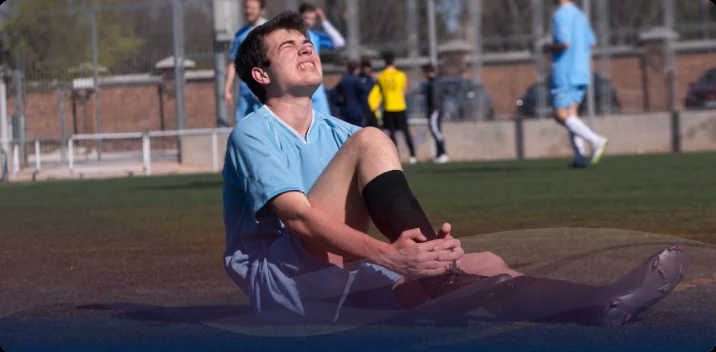
Whether you are dealing with an injury that happened on Saturday or a chronic problem that flares every time training intensity climbs, what separates a full recovery from a managed condition is the quality of the care you get in the early and middle phases.
Plenty of athletes arrive at Active Health after weeks of self-managing an injury, or after a first round of treatment that addressed the pain and never restored the tissue quality and physical capacity needed to return to sport with any confidence.
Sports injury treatment here is built as a sequence rather than a series of appointments, and it ends where most plans do not: at a return-to-sport decision made on testing. You leave the first visit with the plan, the first phase of loading, and the benchmarks that open the next one.
What Sports Injury Treatment Involves
Sports injury treatment here is one coordinated program rather than a modality you book. It puts the clinical assessment, the hands-on work, the recovery technology and the loading into a single sequence, and it treats three separate problems at once: the damaged tissue, the movement pattern that overloaded it, and the physical capacity the injury has cost you.
The sequence is the part most plans get wrong. Tissue heals in response to load, so it needs the right stimulus at the right time. Motor patterns disrupted by an injury have to be re-established before strength work is worth doing. Strength deficits have to close before reactive, sport-specific demand is reintroduced. Skip a step and the tissue is asked for something it cannot yet give.
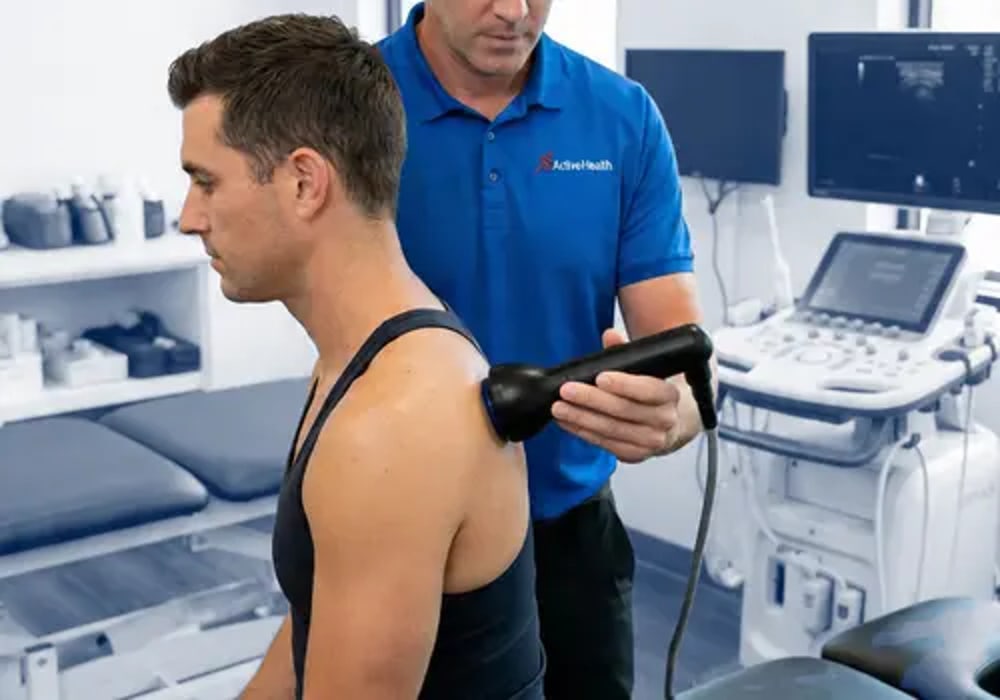
Depending on what the assessment finds, a plan may draw on hands-on soft tissue work, Active Release Techniques, acoustic wave treatment, sequential compression, therapeutic exercise and, where conservative care has stalled, a regenerative option from the medical side of the practice. The National Institute of Arthritis and Musculoskeletal and Skin Diseases sets out how sports injuries are diagnosed and what treatment usually involves, and the framework here follows the same logic.
Injuries We Treat at Our Jacksonville Sports Injury Clinic
These are the presentations that most often arrive at Bowden Road, from spring Gate River Run training blocks to high school seasons that will not pause for an injury.
Muscle Sprains and Strains
A ligament taken past its limit or a muscle pulled at the wrong moment. Both are graded and assessed for structural integrity first, then loaded progressively, because tissue that was rested but never reloaded is the tissue that fails again. See how we handle a graded sprain or strain that has to hold up at game speed.
Tendonitis and Tendinopathy
Overuse tendon pain is a tissue quality problem more than an inflammation problem, which is why rest alone tends to move it rather than resolve it. Acoustic treatment plus graded loading targets the tissue itself. Read about an overloaded tendon that keeps flaring in season.
Plantar Fasciitis
Heel pain that bites on the first steps of the morning and again as weekly mileage climbs. Treatment pairs fascial repair work with progressive posterior chain loading and an assessment of the foot, ankle and hip mechanics driving the overload. Start with heel pain that flares as weekly mileage climbs.
Whiplash and Neck Injury
Contact sport and car impacts produce the same tissue problem: a neck loaded faster than the muscles could brace for it. Soft tissue work plus endurance training for the deep neck muscles sits at the center of it. See our approach to a neck loaded faster than the muscles could brace.
Hamstring injuries belong on that list too: a pulled or strained hamstring is one of the most common reasons athletes come to Active Health, and it is graded and reloaded the same way.
Sports Injury Evaluation
Every plan here starts with a sports injury evaluation, whether the problem is an acute sprain or strain or an overuse injury built over a season. It grades the injury and checks the structure for damage, including whether imaging or a physician's opinion should come first. It looks for contributors along the kinetic chain, above and below the injured area, because the site that hurts is often not the site that failed. And it ends with a staged plan and the benchmarks that open each phase.
How the Return-to-Sport Decision Gets Made
Most reinjury happens after a return decision made on time elapsed or on how the athlete feels. Neither predicts what the tissue can take.
Clearance here is decided on testing. Strength is measured side to side and compared against the uninjured limb. Movement quality is scored on the patterns your sport actually demands. Reactive capacity is loaded deliberately, so cutting, landing and sprinting are tested before they are permitted. Graduated sport-specific work has to be completed without symptoms rather than with them managed.
Time since the injury is one input among those, never the deciding one. Results vary with the tissue involved, the demands of the sport and how consistently the loading gets done, so some athletes clear earlier than they expect and some later. You are told at each reassessment which benchmark is still open and what closes it.
The international consensus statement on how a return-to-sport decision should actually be reached frames it the same way, as a continuum running alongside rehabilitation rather than a single verdict at the end of it. The same statement is candid that the research supporting these decisions in clinical practice is scarce, which is why the benchmarks here are shared with you rather than kept in a file.
What Your Course of Treatment Looks Like
Four phases, each with an entry requirement. You always know which one you are in.
- Assessment. Injury history, the demands you are training for, and a movement and tissue examination run above and below the injured area. Bring imaging or an operative report if you have one.
- Settle the tissue. Hands-on work and, where it is indicated, acoustic treatment or compression to bring the irritation down far enough that loading is productive rather than provocative.
- Rebuild capacity. Graded strength work aimed at the specific deficits testing found, progressed on retesting rather than on a schedule.
- Return to sport. Sport-specific loading and the benchmark testing that decides clearance, with the mechanical pattern behind the injury corrected on the way through.
How Staged Injury Care Compares With Your Other Options
Every athlete with a fresh injury is weighing the same short list. Here is an honest read on all of it, including the two paths that are not ours.
| Option | When it is the right call | The trade-off |
|---|---|---|
| Staged treatment at Active Health | An injury that has stalled, keeps recurring at the same site, or needs a defensible return-to-sport decision rather than a guess. | It costs weeks and it costs your effort between visits. Nothing here is surgical. |
| Rest and time off | A mild niggle that is measurably better week over week without anything being done to it. | Rest lowers tissue tolerance while it lowers pain, so the return is often the moment the injury repeats. |
| Bracing or taping on its own | Short-term protection through a fixture you have decided is worth playing, or early support after an acute sprain. | External support substitutes for capacity rather than building it, and the deficit is still there when the brace comes off. |
| Surgical repair (not performed here) | A complete tendon or ligament rupture, a fracture, or a joint that gives way with imaging to confirm it. | An operation is a one-way decision, and the months of rehabilitation afterwards still decide the result. |
If your presentation looks surgical rather than mechanical, you hear that at the evaluation and we help you find the right physician instead of selling you a plan of care.
Why Jacksonville Athletes Choose Active Health for Injury Care
What separates the work here is that the whole range sits in one building. Tissue work, acoustic treatment, compression and the medical options can be added when they are indicated rather than chased across town on a separate referral, which in season is the difference between missing two weeks and missing six. That coordination is what the sports medicine clinic this program sits inside is built around.
Recurring injuries are the clearest test of it. When the same site keeps failing, the mechanical driver has never been identified, and finding it takes an assessment that looks past the painful area. That is the standard the wider practice behind the sports medicine lane holds itself to.
Insurance and Access
Active Health accepts a wide range of insurance plans for eligible physical therapy and rehabilitation services in Jacksonville, including Aetna, BCBS, United Healthcare, Tricare, Humana, UMR, and Medicare. Some recovery services are elective and self-pay. Call (904) 296-0202 and we will verify your benefits and tell you which parts of a proposed plan your policy covers before you start.